Japan 2025
Japan has been on my list of places to visit for years, but we always found something more important to spend our money on or found a reason to push it back a year. Well, this year my Wife, 3 close friends and I finally put our heads together and planned our first ever trip.
I’m lucky that my family had the means to go on holidays all over Europe when I was young, so I have quite a bit of experience travelling. But even then, I’ve only left the comfort of my home continent to visit the US, South Africa and India. Each of those extra-European trips was a step up in terms culture shock, but I always found a way to settle in. It’s surprising how quickly you can adjust to a country’s customs and traditions if you immerse yourself rather than just observing and this is exactly what I wanted from our trip to Japan.
Our Itinerary
I love a good plan. I enjoy looking at timetables and working out how long it’s worth spending in certain places. I find it sort of cathartic. However, I’m self-aware enough to know that once I reach a place, I will act far more spontaneously than plans allow for. I also recognise that when you travel with friends (even if it’s only a group of 5), that not everyone will want to do the same things.
For this reason, my approach to holiday planning has become an interesting compromise. I like to do my research beforehand, find out what there is to do and how long we might need to spend in the cities we visit. However, I never plan my day-to-day activities. With the best will in the world, I know full well that I’ll wake up and I just won’t want to do what is on some pre-planned itinerary. This is one of the reasons I hate package holidays.
For this trip we decided we wanted to visit the major cities, knowing that we’d miss out on some the more interesting, remote places. The intention being that on a future visit, we wouldn’t feel the pressure to revisit all the major cities we’d already been to which would allow us to have a much more flexible itinerary.
Tokyo (Asakusa, Sky Tree, Ueno Park, Imperial Palace)
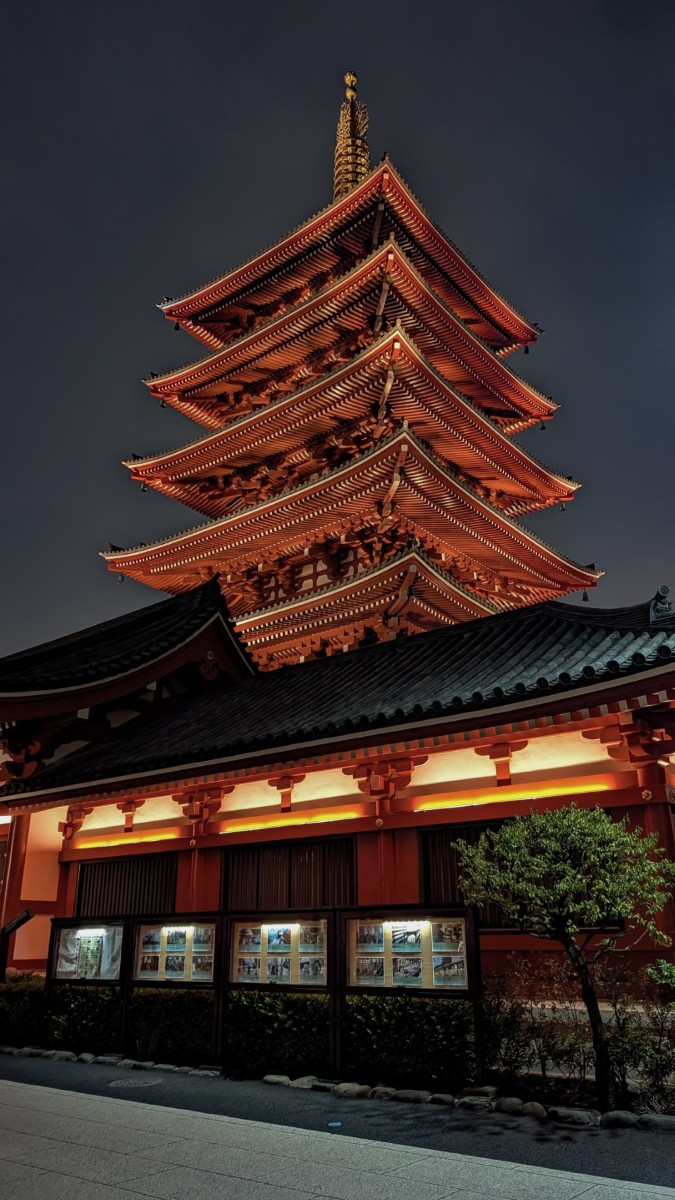
We arrived at Tokyo Narita Airport pretty late in the evening. In order to save a bit of money, we had laid over in Seoul on the flight out, so we’d been travelling for over 15 hours when we landed. Fortunately, there is a train from the airport directly to Asakusa where we would be staying for our first 3 days. After a bit of confusion, we figured out how to pick up our Suica cards and book our tickets.
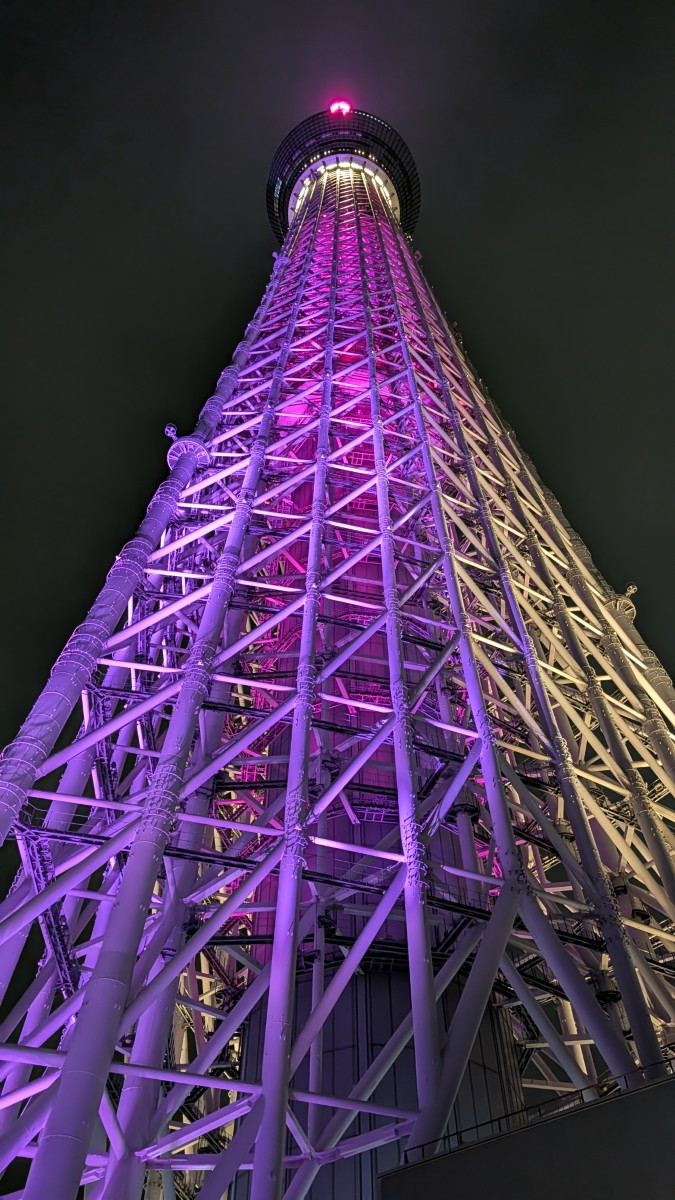
Asakusa is quieter and cheaper than the more metropolitan areas of Tokyo which was a perfect way for us to ease into the holiday. Our hotel was just around the corner from the beautiful Asakusa Shrine [1] and the Tokyo Sky Tree which gives you a phenomenal view over the vast city. We were also close to the Ginza line for convenient trips to the Imperial Palace, Ueno Park and Akihabara.
Both Ueno Park and the Imperial Palace gardens were great spots to take a break from Tokyo’s concrete jungle. Ueno Park in particular is full of temples and shrines and has the Shinobazu Pond which is very photogenic. The Imperial Palace was less interesting but has some well-maintained gardens (Ninomaru Garden in particular) and you can see the old foundations of Edo Castle.
Akihabara is the complete opposite of this. It’s one of the most busy parts of east Tokyo and is aptly nicknamed Electric Town due to its abundance of electronics and gadgets stores where you can find anything and everything that runs on electricity. Visiting this area in the evening when everything is lit up by billboards was pretty cool. We visited a few of the big arcades too to throw some money at various claw machines games and gatcha stations.
Kyoto (Arashiyama, Kiyomizu, Inari)
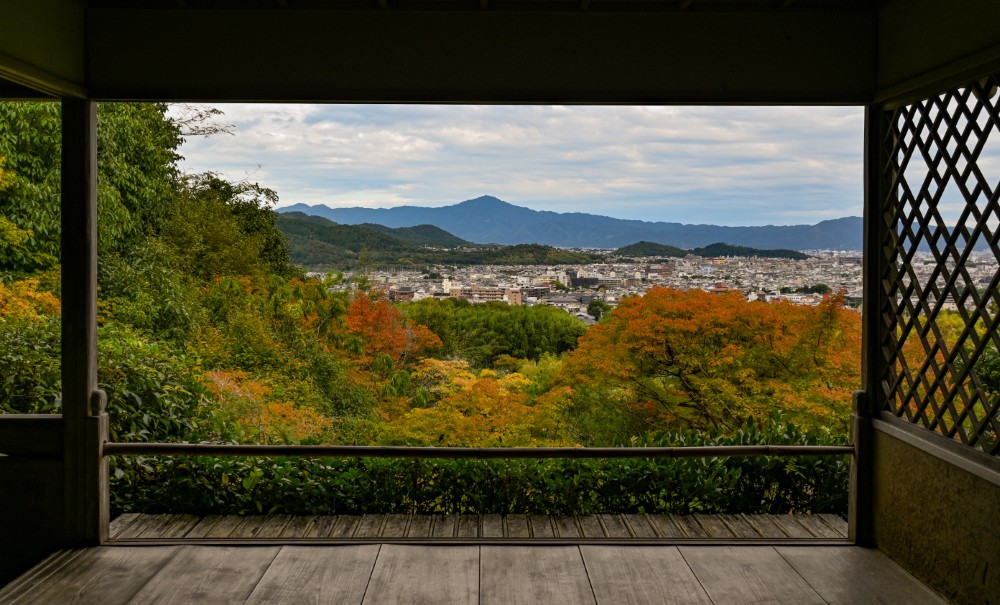
Kyoto is such a beautiful city. It’s full of nature and immaculately preserved buildings. We were really lucky that by the time we arrived the trees had just started to change their colours creating these incredible gradients between the green, orange and red. Everyone says that Spring is the time to visit Japan, but I think October/November is just as pretty - and arguably less busy.
We all stayed in a shared traditional machiya house in a quiet area of the city, and I couldn’t recommend this more, even if you only do it once. It feels very different to staying in a hotel and gives you a proper sense of what it’s like to live in a real Japanese home. It’s also nice to sit around the table together at dinner and breakfast instead of retreating to your individual hotel rooms.
Arashiyama was easily my favourite part of Kyoto. While Yasaka Shrine and Kiyomizu Temple are must see things, these areas felt incredibly touristy and overcrowded. Arashiyama has some beautiful open areas, parks and the famous bamboo forests that are well worth a visit and give you a bit more time to think and breathe.
There are also several fantastic hiking paths including one that leads up to the Monkey Park and another through a manicured traditional garden leading up to the Okochi Sanso Gorge Observation Deck [2].
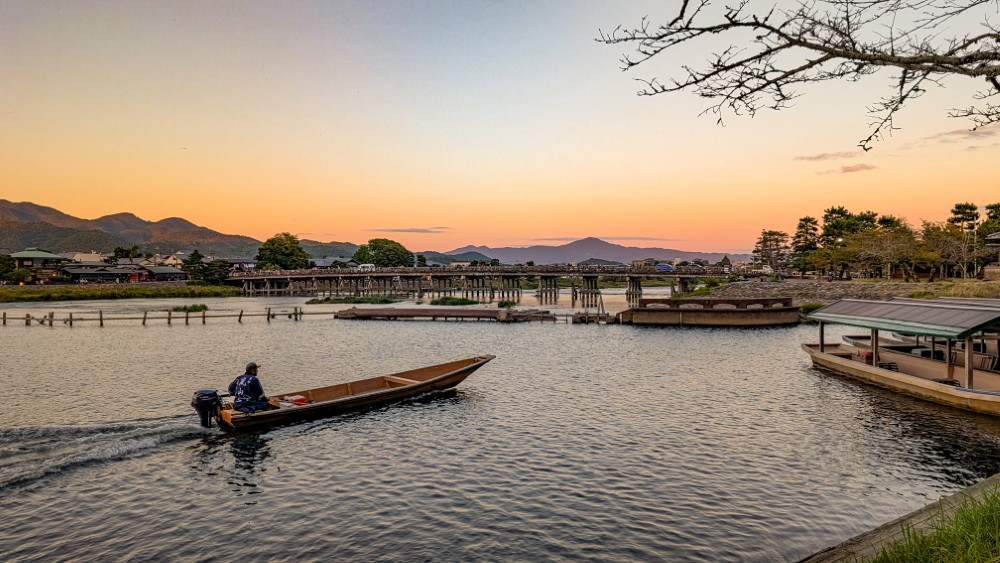
In the center of all of this is the Togetsukyō Bridge which is a traditional wooden bridge that crosses over the Katsura River [3]. This was a really nice place to relax and watch the sunset after a long day of walking and before heading to grab some dinner.
Of course, when you visit Kyoto, you also have to check out Fushimi Inari Shrine, well-known for its thousands of vermillion torii gates. This is definitely an experience that is worth doing early as the crowds can get quite large, but you can also visit later in the day and get some great pictures without the crowds if you’re prepared to hike past the first checkpoint where most people will turn back.
I also really enjoyed walking around Nishiki Market. This is a maze of food stalls and souvenir shops that have anything and everything you can think of. Those who want to take a traditional Japanese kitchen knife back home with them should also come here. My personal favourite foods were the Taiyaki (a fish-shaped pancake with various flavoured fillings) and the chicken and cheese Yakitori skewers. This is also a great place to find Japan’s famous (and expensive) Kobe beef if you’re not visiting Kobe itself. I was not brave enough to try the octopus on a stick…
Osaka (Dotonbori, Nipponbashi Universal, Nara)
Osaka is completely different to everywhere else we visited in Japan. Tokyo is the bustling city with endless things to do and see. Kyoto is the cultural and historical capitol where Japan’s traditions and natural beauty shines. Osaka is neither of those things. In fact, I’ve seen many people say Osaka isn’t worth spending more than a day in. However, we found plenty to do in our 3 days there.
Firstly, we spent an entire day visiting Universal Studios Japan [4]. It was busy, expensive and you really have to buy the pricey fast track tickets to get the most out of your day, but it’s a fun day out regardless. We got extremely lucky with the weather on our visit. It was probably the warmest/sunniest day of our holiday which was ideal given the outside nature of a theme park. They also happened to be running fright nights as it was approaching Halloween, and it was quite entertaining to watch actors dressed as zombies running up to people with very realistic looking and very loud chainsaws.
We also spent most of a day in Nipponbashi, the anime and gaming district where you can find hundreds of stores specialising in pretty much any and every nerdy thing you can think of. We spent most of our time looking at old video games and consoles, figurines and in trading card shops and I picked up my first Pokemon card since I was a child.
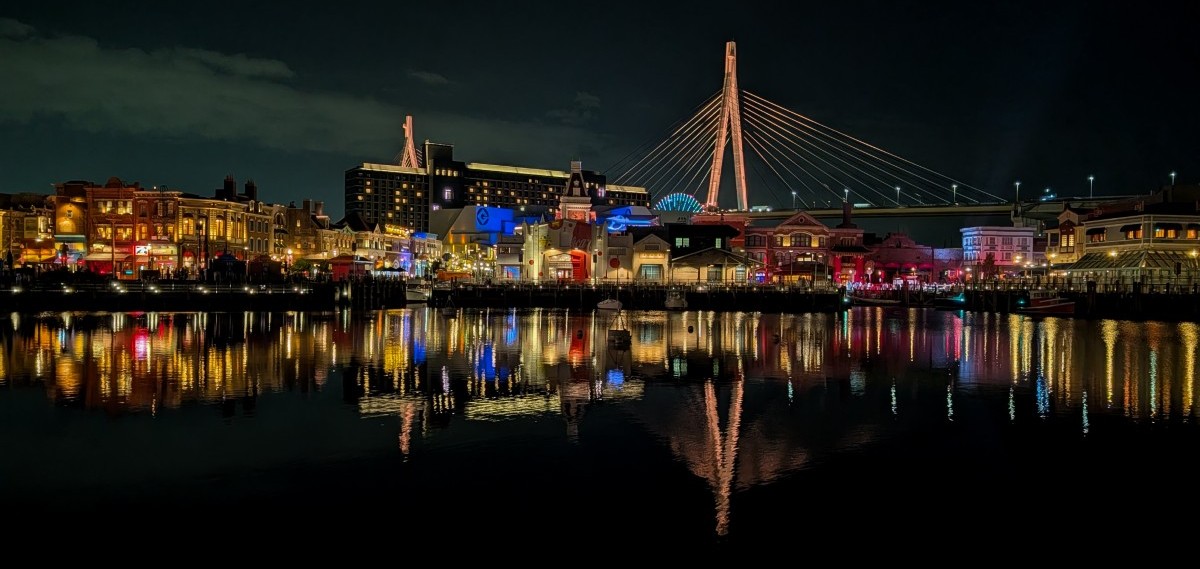
Our hotel was in Dotonbori, which is probably what most people think of when they think of Osaka. Food stalls selling Takoyaki alongside the canals and the famous Glico man sign. At night this area turns into a vibrant melting pot as the locals and tourists alike let their hair down. People were eating, drinking and smoking in the street - something that is usually not acceptable in Japan. This in combination with the narrow streets, overhead electric cables and bright signs gave the area a bit of a grimy cyberpunk vibe that we didn’t really experience anywhere else.
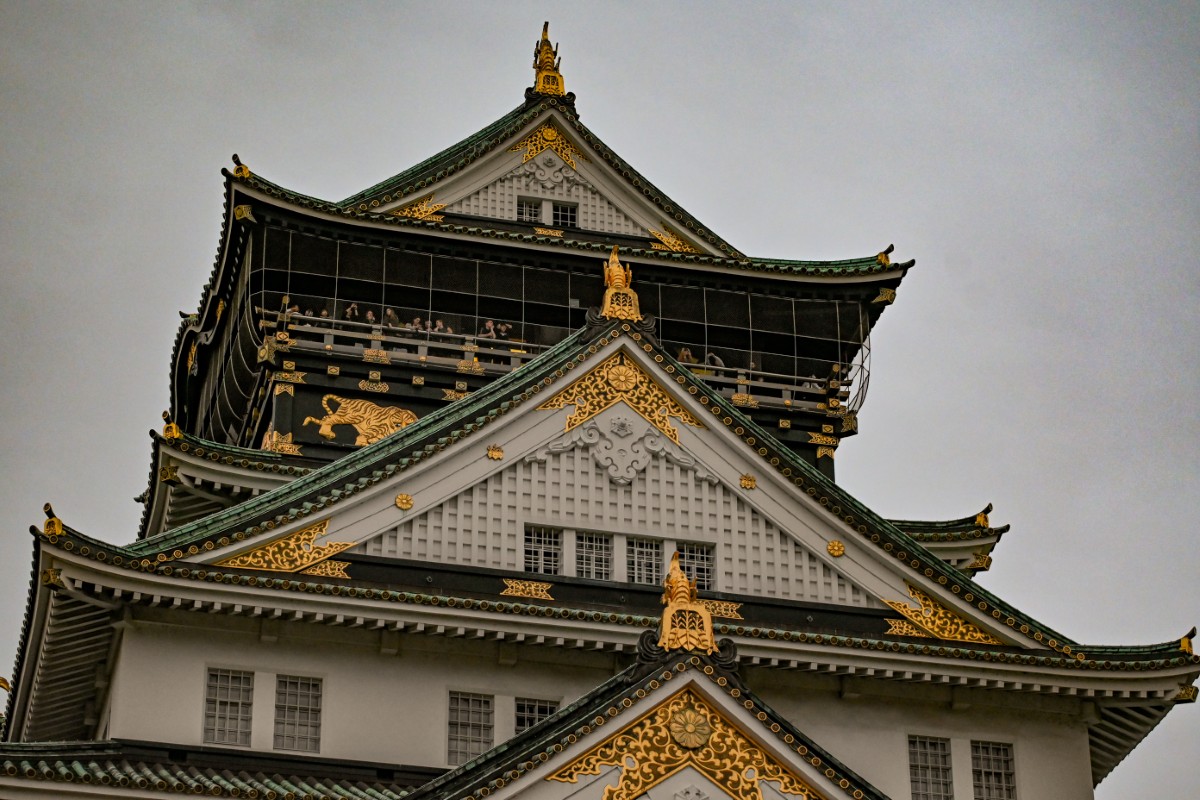
Osaka Castle [5] is a beautiful building, but otherwise not all that special. However, the walk around the park is nice and it would’ve felt weird to leave Osaka without having seen it. We also jumped on a short train to Nara Park where we wandered around and fed the deer. In theory you are supposed to buy some biscuits, bow to them and when they bow back you feed them. However, more often than not, you are just surrounded by a mob of deer the second they realise you have food. Nara is also home to Tōdai-ji where the giant Buddha statue resides. This temple was probably my favourite from the whole trip. The architecture of the vast building that encompasses the statue was impressive and the building has an interesting history having been destroyed and rebuilt multiple times.
Hakone (Lake Ashi, Onsens, Mount Fuji)
Even though our aim was to cover the major cities on this trip, we wanted to visit at least one place that was a little more rural and we did this with our visit to Hakone, an onsen town about an hour outside of Tokyo. The town is situated on Mount Hakone which forms a part of an ancient volcanic caldera. After centuries of geological and tectonic activity, Lake Ashi formed in the crater left by previous erruptions. This is an incredibly scenic area with incredible views of the neighbouring Mount Fuji over the water [6].
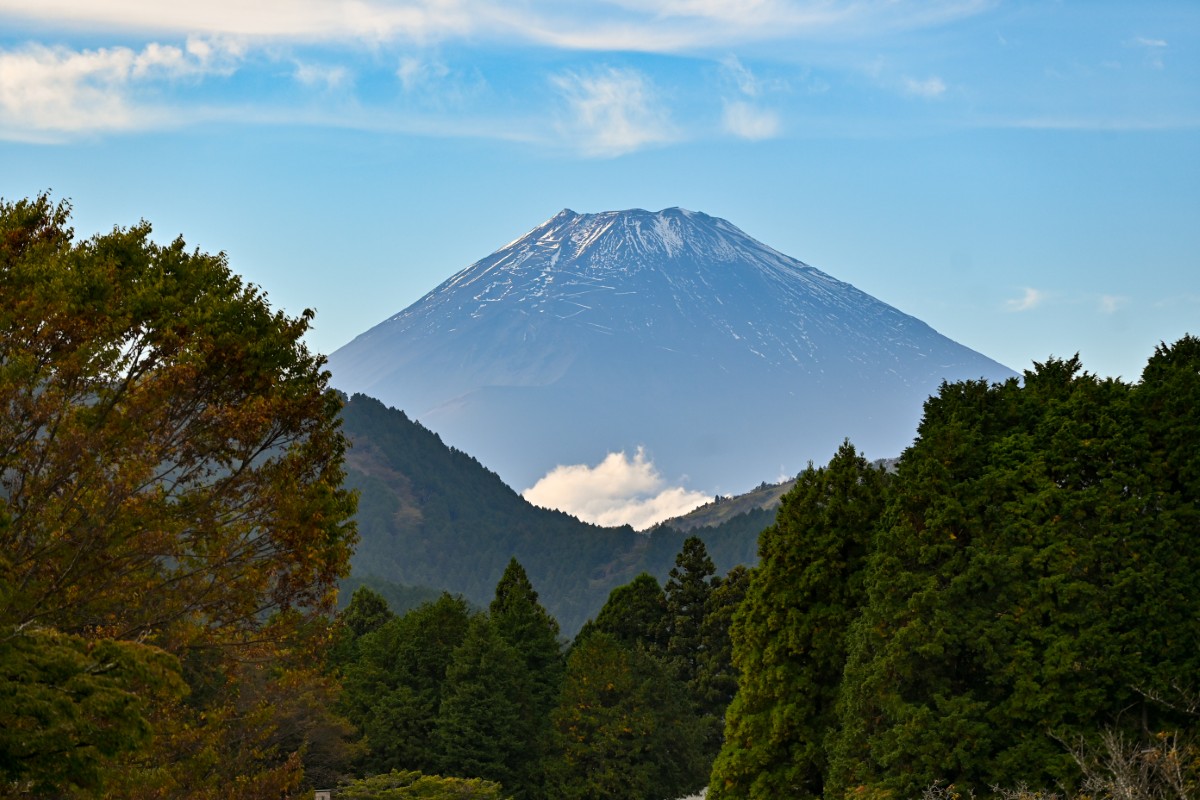
The views of Mount Fuji are unfortunately often obscured by fog, so we were pretty excited when we arrived that it was clear and we were able to see it in its fully glory.
Our hotel was on Mount Hakone itself. To get there you have to use the Tozan mountain railway. The train takes the scenic route up the mountain from Odawara traversing many tunnels and bridges and performing 3 switchbacks on the way because of how steep the terrain is.
At the hotel, we enjoyed the selection of onsens which are essentially baths filled with natural spring water. Some of these baths are private and some are public depending on your level of comfort. The water is piping hot in most of them so you can only reasonably spend 20-30 minutes before feeling like you’ve been boiled alive. However, it’s a truly unique and relaxing Japanese experience.
From the hotel, you had to get a funicular and a cable car up and over the mountain to Lake Ashi. The cable car stops in Ōwakudani which has views over the Sulphur vents and is famous for its black eggs - Not for those who can’t handle strong smells. The Hakone Geo Museum is located here too and was well worth a quick visit given how cheap it was. It had lots of interesting information about the history and geology of the area and the formation of the caldera.
The cable car ends at lake Ashi and once there we walked around the east side of the water stopping briefly at some torii gates that have been built in the water. The latter of these belongs to Hakone Shrine which has been around in its current form since 1667 and was popular with Samurai. From the far side of the lake, we then boarded one of the traditional sailing ships that have been set up to ferry passengers across the lake. This gave a great opportunity to take photos of Mount Fuji across the water as is shown in the splash photo of this post with Hakone Shrine’s torii gate to the side.
Tokyo (Shibuya, Shinjuku, Harajuku, Halloween)
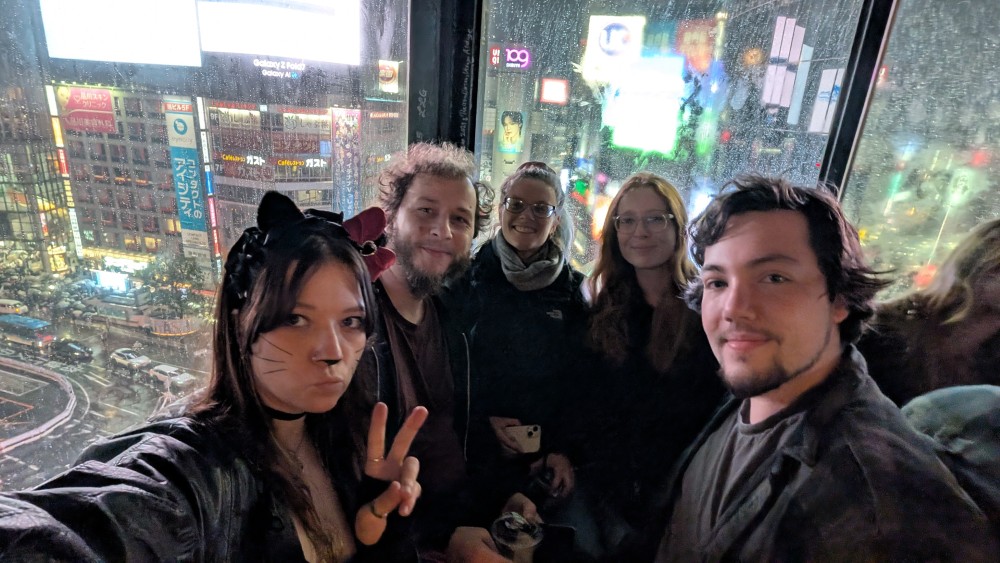
After our relaxing trip to Hakone, it was time to return to Tokyo where we would be flying home from. However, we still had a few days left to enjoy and one of those days just happened to be Halloween. A holiday that is unexpectedly popular in Japan.
We started the evening in Shibuya at a bar overlooking the scramble crossing [7] and made our way up to Shinjuku where we somehow found a tiny bar on the second floor of a random building that sold an amazing apple flavoured cocktail. One of the best things about Japan is these hidden spots. It feels like you could live there for years and still miss places like this.
By the time we left the bar, the weather had turned and it was now torrential rain. Completely soaked and cold, we returned to Shibuya for a change of clothes before a few of us returned to an incredibly busy bar that we had passed the day before. Here we met a few people travelling from India and stayed up chatting until the early hours. Meeting new people and sharing stories is absolutely one of the best parts of travelling. This was one of many times this happened and every single one of them was fantastic.
The last couple of days were spent doing some shopping and exploring places like Harajuku, Takeshita Street (Another famous shopping street) and Yoyogi Park. We also visited the Pokemon Center in Shibuya and had as much Sushi and Ramen as we could possibly eat.
Food
Food is one of the big reasons why we wanted to visit. My wife and I in particular love Japanese food and is often our first choice for a meal out. Even then, we were blown away by what we experienced. Food was not just high quality, fresh and incredibly tasty, but it was also relatively cheap. There were exceptions to this, such as buying Wagyu in touristy areas or fruit (which was not only expensive, but relatively hard to come by outside of supermarkets), but generally buying food in both restaurants and supermarkets was significantly cheaper than it is in the UK.
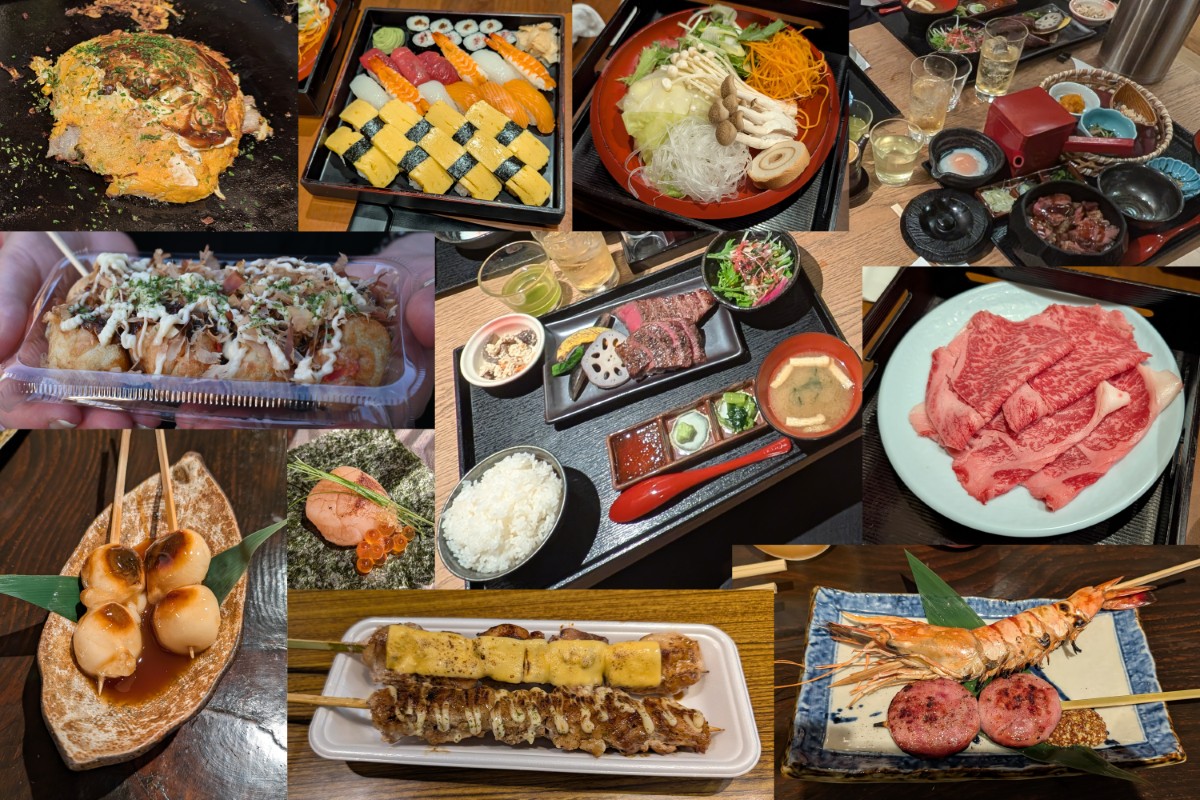
Coming from a country where Japanese food is an occasional treat where you’d often spend upward of £100 for a meal for two, we were blown away when we went to a sushi bar, filled our stomachs and walked away only £25 poorer - including drinks. This was a regular occurrence, and I found myself translating the currency wrong just because I couldn’t believe what the actual price was.
We visited a few Izakayas on our trip. These are often very small with barely room for more than a handful of patrons. These consistently had the best food and were always run by super friendly locals who you could tell were passionate about their business and food. The standout was Tō-ji no Kaeru Shokudō in Kyoto. The whole place was run by a single man. Despite a significant language barrier, he made our night special. The scallop sashimi and the agedashi tofu being particular highlights.
I also can’t talk about Japan and food without mentioning “combinis” (convenience stores) like 7-Eleven. It’s completely different to any local shop experience I’ve had in any other country and can’t for the life of me work out why the rest of the world hasn’t caught on. The variety of both hot and cold fresh food is fantastic, with facilities to heat or prepare your meals on site. This is one of the things we miss most now that we’re back home. The hot garlic chicken slices that leave a flavour in your mouth for hours after still haunt my memories.
Honourable Mentions
On our first day at Asakusa Shrine, I joined a queue without knowing what it was for. I ended up buying a Goshuin stamp book, a traditional, sacred book that is intended for pilgrimage to temples and shrines. More recently, they have become popular with tourists. The idea is that when you visit a temple or shrine, you hand your book to a person, and they stamp your book in return for a small fee.
Many of these stamps are hand drawn using traditional tools. It’s fascinating to watch and you get to take home a beautiful, handcrafted book which records of all the places you visited. Just make sure you don’t put one of the many non-sacred Eki stamps that you can find across the country in it or you might find that they are not willing to stamp your book anymore!
No trip to Japan is complete without visiting a Don Quijote. They’re a bit touristy and you will walk out with a bunch of things you didn’t know existed and definitely don’t need, but it’s a really fun experience. We first visited the one in Asakusa after a few drinks. It can be incredibly overstimulating from all the colours, sounds and smells and if you visit at a popular time of day prepared to be sandwiched in the narrow isles by other shoppers.
We did spend a single night in a capsule hotel before our trip to Hakone. I think this is a rite of passage for tourists in Japan. It was pretty much as expected: somewhat uncomfortable and hard to sleep in. However, saving money by doing this on days where you know you won’t be staying in the hotel long is smart.
Everyone talks about the fancy toilets when they visit Japan and they’re right to. Heated seats and bidets even in the places where you would expect them least. It took my western brain a second to get used to them, but once you do, you’ll never look back. Also, no-one talks about the lack of doors in the entrance to public restrooms. Having to touch a door to leave the toilets after washing your hands always felt counter intuitive to me. Nearly all the public toilets I visited in Japan just had a little bend in the corridor to obscure your view rather than a door. A nice touch.
Japanese umbrellas are simply superior. Cheap, reliable, available everywhere and transparent. You can leave them on the side of a street or outside a shop/bar and it will still be there when you return. Most hotels will have ones you can borrow too. I brought one home with me and still use it.
Summary
It’s hard to pick favourite moments from this trip. This post barely scratches the surface of what we did, and some things have been completely omitted to keep it at a reasonable length, but I’m extremely happy with how it went and wouldn’t change a thing we did. I think one of the most important things when travelling as a group is that everyone feels comfortable enough to go and do their own thing and that no-one feels pressured to do things they aren’t interested in - especially for big trips like this where you aren’t likely to visit regularly and only have so much time.
Some of my favourite moments were when I was by myself or when we were meeting new people and it’s an important reminder to have the confidence to put yourself in positions where you will have new experiences, even if it makes you a little bit anxious.
If for some reason, you’re reading this and you’ve been thinking of going to Japan. Do it. You won’t regret it and it’s not as expensive, or difficult to navigate as you might think. It’s genuinely one of the best places on the planet and I can’t wait to go back and see more.
We’re already planning a trip to Eastern Europe in the Spring, and I’ll probably post about that when we get back! Until then, I hope this was somewhat interesting and safe travels to all.